A Clean, Multipurpose Agency Theme


Laura Peters Wet Plate Collodion Workshop

After seeing the wet plate photography being used online and researching the work of Rodger Fenton, I've developed a love for the soft aesthetics in produces. As an introduction I attend Laura peters wet plate workshop where she took us though every step of the process. I was joined on the workshop by Kirsty Walden a portrait photography who did some amazing portraits of me thought the day.
The darkroom

The camera used, your standard plate camera with a lens form the 19th century.

The slides are adapted to take the plates


Cololodium poured on to the plate is part of the sensitising process

Kirsty rocks the collodion covered plate to brake up any rivulets that may have formed while covering the plate


Then the plate is ready to be sensitised and loaded into the plate holder, this has to be done under red light to stop the plate form fogging.

After the plate is sensitised a exposure is taken, the low sensitivity of the process requires long exposures this allows the lens cap to be used as that shutter.

The developer is measured out before the lights go out

You can watch as the Image develops


Development is then stopped


The image is then fixed

And washed


Once dry the image then needs a varnish to keep it on the plate.


The workshop was an amazing introduction to the process and Laura relaxed guide thought the process allowed us to be as experimental with the process and lead us to find out how the different materials reacted to the sensitising. I would recumbent the course for anyone no technically knowledge is needed as its a very hands on course.
Laura's wet plate work can be found at http://www.laura-peters.co.uk/p959606495

FMP Development
I have chosen to continue the path of outdoor sports as it feels like a natural progressing from my personal work created hiking and camping in the Lake district. These trips form candid documentaries that have a truth and narrative too. With this series of images Im going to look for a stage but natural look which so I can deliver a more concise, concentrated message. It will be more of a photo shoot than a photographer following an activity.

The next step is to develop the idea through research and evaluation. Areas I need to research are
The next step is to develop the idea through research and evaluation. Areas I need to research are
- Look into the style of photography and how its used with the media and social settings
- Explore camera techniques that could be used to help express the narrative with in my series
This will lead me to a more coherent theme for the project that can then be developed in to shoots. once I have decided on the theme I will need to look into:
- Subjects, finding athletes that are willing to take part and understand the concepts
- research each sport
- plan the shoots considering
• Aim of each shoot / the images I imagine
• Location
• Access
• Costs

Final Major Project proposal Landscapes
Landscapes
There is a current trend of creating surreal dream like scenes with long shutters and pushed saturation and while these are pretty they don't show a real situation. reflecting on my experience of Ansel Adams zone system I will look at creating realistic images that reflect what I see and experience. I would look to work with colour as a means to push the ideas of the zone system but not replicate it.

Ansel adams
His concept of contrast making a interesting image the zone system are a big influence with in my work while the technique can be applied to colour it intensity is often muted as you push an images tones.

Working with landscapes will require Patience and adaptability with the changing nature of the environment. To be able to push the look I see I would need to research filters and its effects
looking for interst

looking for interst
looking at how light and interacts with its environment show is a way of catching the atmosphere. by braking form the go to equipment you get a unique angle and views.


Final Major Project proposal outdoor sports
Sports
I got into photography thought action sports and would like to explore that more. The 2 areas that interest me are photoessays and Editorial images. I don think the 2 areas are exclusive and will look at how I could produce a body of work that incorporates them in to a cohesive product.
Areas of influence
Pinkbike Photoessays
Pinkbike frequently uses photoessays to deliver story coving events, exhibitions and Factory tours and excursion. They give the photographers creative freedom allowing them to use varying photographic techniques to give interesting/exciting perspectives.

Pinkbike Photo of the day
A platform for sharing biking photos the Photo of the day is a means of celebrating the best images submitted and creating discussion both around the sport and the photography. The standard of images here is a good source of inspiration

Pinkbike Photo of the year
Steaming from the POD, the photo of the year is a competition consisting of the best images of the year. its a good source of creative and professional images

Whitelines snowboard magazine
The Whitelines Magazine covers have a somewhat more artful feel they have a mixture of set up shots and natural shots using contrasting blues and yellows.

Whistler Deep winter photo competition
A competition setting teams of athletes with photographers and giving them a 72 hours to produce a slideshow. There is a high quality running thought the production of those and while the subject may be similar the narrative is always different.
Redbull Illume
Redbull has associated itself with the alternative sports industry and as a way to give back created the illume brand. With both its competitions and publication this give a celebration of photography and action sports.

I have purposely chosen to cover outdoor sports as a means to mix the sport with its surrounding, possible subjects could be.
Trail building/ MTB
Hike a bike- XC
Kendal Dry slope- Ski and Snowboarding
Canoeing/kayaking
Climbing/ scrambeling
Kiteboarding/Windsurfing in Cumbria
Surfing Cumbrians searching for surf
Triathletes
skateboarding
Enduro
By finding people involved in a range of these sports I can work with them to tell their story.

Final Major Project proposal Production Skills and Craft
Production, skills and craft
Celebrating the Ideal of learning a craft, show casing what goes in to productions of everyday Items and the workshop enviroments that are as unique as the prodcuts creating.
There is an growing trend for promotional videos to be produces showing the effort and skill going into making a product. These have a strength and honest making the products seam real and while showing there value. the idea would work as a promotional photoessay style
A small 2 man biking company working out of a shed. theres a very tacktile quality to the environment the bikes are built in and miles away form the indstrial power houses normally imagined. yet they employ modern techniques sucha as CAD which gives a sweet contrast to the somewhat hostile workspace.
This style could ba applied to any type of production from a giant industrial program to a single person production in a spare room.
Celebrating the Ideal of learning a craft, show casing what goes in to productions of everyday Items and the workshop enviroments that are as unique as the prodcuts creating.
There is an growing trend for promotional videos to be produces showing the effort and skill going into making a product. These have a strength and honest making the products seam real and while showing there value. the idea would work as a promotional photoessay style
Meyer & Ferreira Handcraft furniture
By showing their factory and work process, you can see how the workers are enjoying themselves and the process they go thought to create there product, the use of artificial lighting with in the images adds a warmth and brightness that would not be achievable without. The have created an interesting atmosphere with the use of varied angles and shots.

BTR Fabrications
A small 2 man biking company working out of a shed. theres a very tacktile quality to the environment the bikes are built in and miles away form the indstrial power houses normally imagined. yet they employ modern techniques sucha as CAD which gives a sweet contrast to the somewhat hostile workspace.
This style could ba applied to any type of production from a giant industrial program to a single person production in a spare room.

Paradise Forum
With the New library taking over from the Old library in 2013, the Old library has begun a 10 year development plan designed to alter the space into retail and office space. With the development removing the old structure I wanted document its current use while collecting people options on the current building, the Paradise plans and their experience with the Old library.
Mr Husain
"Its the identity of Birmingham, it should keep it and regenerate for use"

Penny and Bill
"I remember it being built, it was so modern"
"its been described as an incinerator"
"I've used the archived it will be a shame if they can't match the service in the new libary"

Adanna, Kenyah and Lauren
"Architecturally I like it ascetically its ugly"
"The development is not needed, other things are"

Amitabh
"It clashes with the old. The new design is a vast improvement it mirrors the old columns on the town hall "

-
"As a regular user its really sad to see it go, the structure should be saved"

Alzat
"It should be redeveloped if its not being used"

Josh
"Its dated but the arts nice"

Layda, Haashim, Zara, Peter and Dhananjoy
"My favourite restaurant closed, we don't more shop they are just going to drive us out of the city "

Russel
"Built, served its purpose and its time to go"

Stan


Critical study- Why do we manipulate images?
Why do we manipulate images?

There is a general
consensus that editing is wrong, the term ‘photoshoped’ has developed into a
term to discredit images stating that they are fake. but this is a somewhat
naive view jumped too when are taken out of context. The reason for editing is
unique to each image or create, a photojournalist may have seen a greater range
of tones than the camera can catch, a Wedding photographer may want to use an
artistic licence to add colour to connotation love or an advertiser wanting to
create a more attractive form to increase appeal. While we may not agree with
the ethics or motivation should we be blaming the techniques used to create
them.
Retouching and image
manipulation have been around since the start of photography, As a means to
push the limits of the technology even in the 19th century this was a
controversial practice as it was not truthful.
Areas of interest
Henry peach Robinson combination printing - Fading away
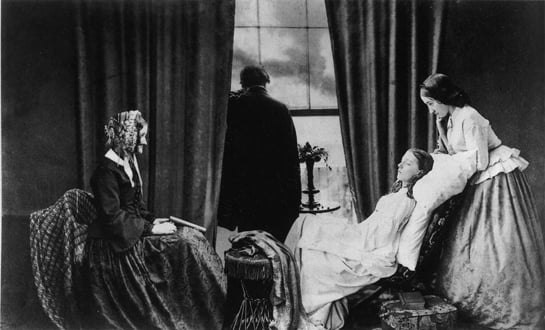
Combination printing was seen as a
means of expressing a theme, by combining different negatives to create a
single image with a greater dynamic range than the photographic process
allowed. In the 19th century photography was still finding its feet, with the
camera being linked to truth the traditional painters freedom was somewhat
removed.
Ansel Adams and the zone system
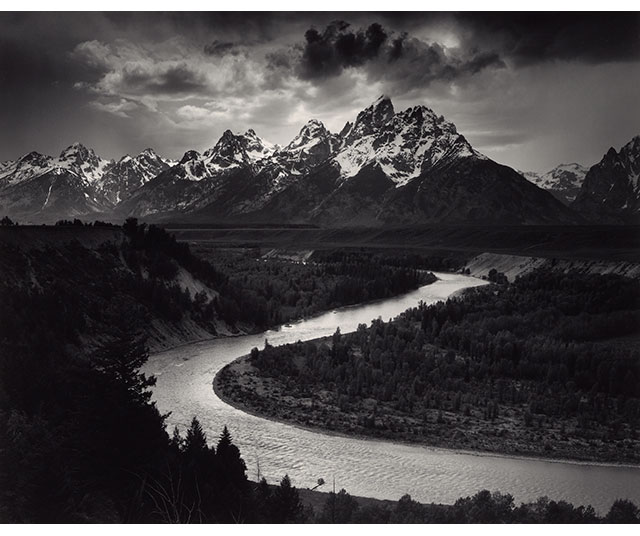
Adams zone system defines the whole process form composition, exposure and printing. Adams believed that understanding this link was key to a successful print. A direct response to the Pictorial movement popular at the time.
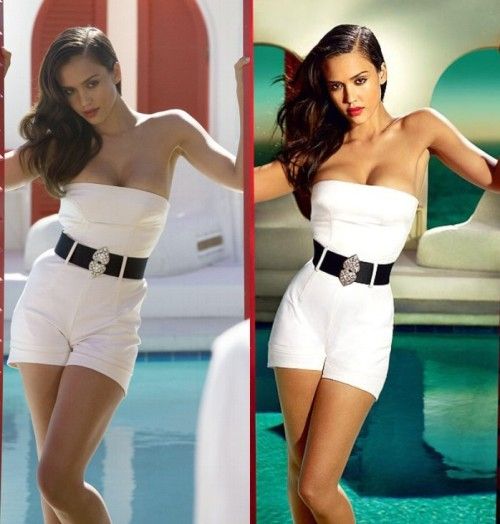
The practice of altering a model's shape and size has been controversial for sometime now, By misrepresenting the human form the industry creates desire, an notion that you can be like this if you buy our product. while we know its happening and campaigns get criticised for its uses it still happens.
A digital image straight
from the sensor is very ‘clean’ compared with film where the different
emulsions carried characteristics altering colour tone and contrast.
Photographers used this to create a style and add elements to their work.
applying the same characteristics digitally creates ethical issues.
Post production vs preproduction
effects can be created pre
or post production, by over exposing you can create a glow that smooths skin,
or using longer lenses can make a person look thinner as the distortion is
less. these create the same effects as doing them in post the only difference
is they are some what controlled.
In the public hands
Digital photography has had
a short but rapid growth, not allowing it to develop natural theory behind its
use and effect. filters are now allowing anyone to alter there images but
without understanding of visual representation dose this cheapen the idea
of manipulation as a tool to improve and express.
Conclusion
Thought this study I look
to develop a understanding for the motive of manipulation, and where the negativity
towards the process stems from. as well as deciding how and why we can combat
this tread.
Subscribe to:
Posts (Atom)
Popular Posts
-
Why do we manipulate images? There is a general consensus that editing is wrong, the term ‘photoshoped’ has developed ...
-
This weekend I went camping in the lake district, getting away form civilisation and distractions allows you to slow down and observe what i...
-
 Today we where given the task to follow a brief similar to that a art director might set; to collect sample images that correspond to their ...
 -
 During our recent trip to Brighton Biennial we took the opportunity to demonstrate the use of flash guns on location. I wanted to use...
 -
 I was asked to remove the lens flair from this image as they wanted to print it fairly large. so theres a few things to things bout wh...
 -
 Hollywood promotional portraits where used to created interest in a actor or actress during the golden age of Hollywood. The characteri...
 -
 My friends play in the local basketball team the Kendal Warriors, While I was up in the Lakes they had a match vs Newcastle Univercity which...
 -
 I recently had a quick shoot to on the shore of lake Windermere originally the shoot was to demostraight the use of flashguns but the overca...
 -
 Its possible to create colour images form black and white film by using RGB filters and creating 3 images, this gives you 3 tonally differen...
 -
 With Ryan air offering cheap fairs across Europe it can be cheaper to travel abroad than across the UK. At just £28 for a return flig...

Twitter Updates
Meet The Author
Blog Archive
Get In Touch
Category
- Band
- Basketball
- big day
- biking
- Birmingham
- blea tarn
- Boomerang
- Bootlegers
- building
- camp
- Camping
- Collodion. Old school
- composite
- consell hall
- Dallam
- Darkroom
- Editing
- equipment
- Film
- Film characteristics
- grasmere
- Helvellyn
- Hike
- hoop
- kendal
- krisbentham
- lake district
- Lakes
- lens flair
- Library
- marriage
- nikon
- Old library
- Paradise
- Photo
- Photog
- photograph
- photography
- photoshop
- portrait
- preset
- progressive lines
- Public opinion Black and white
- removal
- spinners
- Stars
- Striding edge
- technique
- tent
- the lake district
- the lion and the lamb
- time-lapse
- timeline
- trail
- tripod
- uk
- Vox POP
- Walking
- warriors
- Wedding
- wedding photographer
- wedding photography
- Wet Plate
- wild camp